Black Hole Explorer Mission Development in Japan
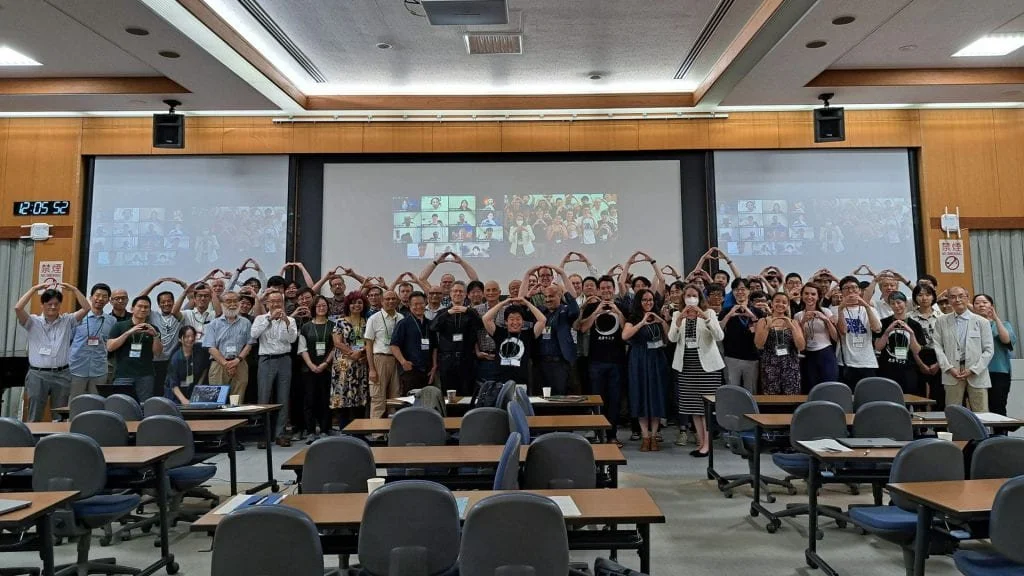
A photo from the first international conference of the BHEX mission “The Black Hole Explorer Japan Workshop“ in May 2024, chaired by Prof Akiyama. Adapted from Akiyama et al. (2026).
The Black Hole Explorer (BHEX) is a next-generation international mission concept that aims to place a radio telescope in space, extending the capabilities of Earth-based observatories to capture the most detailed images ever obtained of black holes. In this paper, researchers of the BHEX Japan Consortium report on Japan’s growing contribution to the mission, including the establishment of a dedicated working group at JAXA/ISAS, the development of advanced technologies such as ultra-sensitive superconducting receivers and cryogenic cooling systems, and upgrades to key ground-based facilities including VERA and the Nobeyama 45 m Telescope. These developments are laying the foundation for future observations that could reveal the long-predicted photon ring around black holes and enable unprecedented tests of gravity in the strongest known regimes. Prof Akiyama led this contribution as a co-lead of the BHEX Japan Consortium, helping to coordinate Japan’s scientific and technological efforts within this ambitious international project.
The paper, Akiyama et al. (2026), was published in the Proceedings of SPIE as part of the conference Radio Telescopes, Technologies, and Methods, presented at SPIE Astronomical Telescopes + Instrumentation 2026 in Copenhagen, Denmark, along with 3 other contributions from the BHEX mission, including the paper by Srinivasan et al. 2026 involving Akiyama.